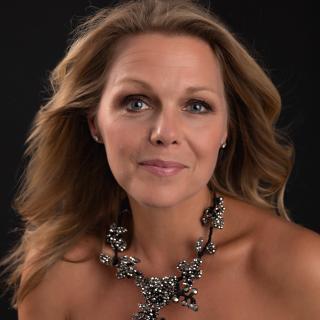
Conductor Adam Fischer breathes new life into Viennese classics. Swedish soprano Miah Persson is a celebrated Mozart interpreter on concert stages around the world.
“Haydn was full of surprises. In his day, audiences loved it, they shouted, they celebrated, the atmosphere at a concert was like a rock concert today.” Conductor Adam Fischer believes that the essence of a performance that is faithful to the era is not that the music sounds the same as it did 200 years ago. What is more important is that the performance affects the audience the same way it did when the composer was alive. “A period performance is no good if it leaves people cold.” (Rondo magazine, 3/2025)
The premiere of Béla Bartók’s orchestral suite The Miraculous Mandarin was accompanied by a storm of scandal and audience riots. The work’s range of expression ranges from the barbaric and riotous to the sublime and sophisticated.
Ludwig van Beethoven: Coriolan Overture
Music for the stage was a recurring bother for Ludwig van Beethoven (1770–1827). He tinkered with his opera Fidelio (1814) for a long time and was never really satisfied with it. He even wrote four overtures for it before he could let it go. His incidental music for the plays Egmont (1810), The Ruins of Athens (1811) and The Consecration of the House (1822) is very much not performed these days – except for their overtures. Perhaps Beethoven simply did not want to sprinkle his drama into interludes across the production in service of the text; indeed, his overtures are like tone poems with a coherent dramatic arc.
The concert overture Coriolan (1807) was inspired by the play of that name by Heinrich Joseph von Collin. It tells the story of Caius Marcus Coriolanus, a Roman nobleman who falls into disfavour with the public. Embittered, he flees Rome, only to return at the head of a foreign occupying force to capture the city. In William Shakespeare’s play on the subject, he is murdered at the end, but in Collin’s version he commits suicide after realising that he is unable to deny his mother’s and wife’s pleas to lay down his weapons. At the time, Coriolanus was understood to represent Napoleon, who was only just beginning his campaigns of conquest.
Beethoven does not underscore plot developments with unambiguous effects in the way that someone like Richard Strauss would do in his tone poems a century later. Nevertheless, the main subject can be understood as representing Coriolanus’s pride and wrath, while the melodic major-key second subject frames the peaceful and tender female figures.
Béla Bartók: The Miraculous Mandarin Suite, Op. 19
The devastation of the First World War fundamentally altered the foundations of art music. Romantic sonority, national pride and overt emotion were replaced with cold pessimism and the sounds of industry and urbanisation. The modern style of music cast humans as passive bystanders while lifeless machines thrummed their inevitable way towards a dystopian future.
At the end of the war, Austria-Hungary lay in ruins, and the new right-wing government kept a close eye on left-leaning artists such as Béla Bartók (1881–1945). Bartók had gone into hiding on the outskirts of Budapest, recovering from the Spanish flu without electricity, running water or sufficient nutrition. It was under these circumstances that he wrote The Miraculous Mandarin (1918–1919), a “grotesque pantomime” depicting individuals as commodities in a faceless machine.
Based on the eponymous story by author Menyhért Lengyel, the ballet takes place in the back alleys of a large city, at a brothel where unsuspecting men are seduced, relieved of their money and thrown back out into the street. A wealthy Chinaman, a mandarin, appears at the door one night, and a lovely maiden seduces him with her dance. Thugs waiting around the corner waylay the mandarin, but he puts up a fight: despite being stabbed and throttled, he clings to life until he has satisfied his lust. The concert suite adapted from the ballet (1927) is about half the length of the original; it culminates in the violent scene where the mandarin chases after the woman, bleeding from the knife wounds on his body.
Joseph Haydn: Scena di Berenice for soprano and orchestra
Joseph Haydn (1732–1809) became famous across Europe despite being in the practically exclusive employment of the court orchestra of Prince Esterházy of Hungary for nearly 30 years. Immediately after leaving this position in 1790, Haydn received a flood of commissions from around the continent and a personal invitation to visit London, where he was met with a hero’s reception and an honorary doctorate from the University of Oxford.
Because orchestras in England were bigger, better and more diverse than in Vienna, and the public more receptive, Haydn was able to give his creativity free rein with no practical limitations. On his two visits to London, he produced his last 12 symphonies, the opera L’anima del filosofo, several concertos and piano pieces. He wrote the concert aria Scena di Berenice (1795) as a dramatic virtuoso vehicle for star soprano Brigida Banti, who had settled in London. Although Haydn criticised Banti’s performance as “lacking” in his diary, he was evidently pleased with the concert and with the piece itself. He conducted a performance of the aria again in Vienna in 1803; he praised the voice of Anna Milder, who performed it on that occasion, as being “as large as a house”.
The text of the scene comes from a Metastasio libretto, Antigono, specifically from Act III. Berenice has been betrothed to Antigono, although she is actually in love with his son Demetrio. Faithful to his father, Demetrio has broken down under the moral conflict and resolves to kill himself. Desperate, Berenice feverishly bemoans her fate and longs for death alongside her beloved.
W.A. Mozart: Bella mia fiamma – Resta, o cara, KV 528
In October 1787, W.A. Mozart (1756–1791) arrived in Prague to oversee preparations for the premiere of his opera Don Giovanni. He lodged at a villa outside the city, owned by composer František Dušek and his wife, soprano Josefína Dušková. Mozart had promised Dušková a concert aria setting the text ‘Bella mia fiamma’ from Niccolò Jommelli’s opera Cerere Placata (1772). As the aria failed to materialise, Dušková eventually locked Mozart in his room until he fulfilled the promise. Mozart got to work but issued a counter-demand: if Dušková could not correctly sight-read the various traps written into the aria, he would rip up the score. Dušková passed with flying colours, and Mozart entered the aria in his catalogue of works five days after the first night of Don Giovanni.
This origin story was recorded by Mozart’s son Karl Thomas in 1856, and there is not a single fact to corroborate it apart from the completion date. It is nevertheless plausible that Mozart would write an aria specifically for a star soprano like Duškova, who would revel in the chromatic slides and daring leaps expressing despair and sorrow. However, there is no feasible explanation as to why Duškova would have desired an aria based on a little-known opera – and one that was originally written for a male character, at that.
In the aria, Titano, King of ancient Iberia, bids a bittersweet farewell to his beloved Proserpina, who is the daughter of Cere, Queen of Sicily. Cere condemned Titano to death for daring to propose marriage to her daughter.
Joseph Haydn: Symphony No. 103 in E flat major, ‘Drum roll’
The symphony is regarded as the championship genre of art music, the creating of a large-scale architecture that can only be imbued with the appropriate symmetry and internal logic by consummate masters. This is a romantic notion: as early as in the first half of the 18th century, a ‘sinfonia’ was mostly just an opera overture, a medley or mishmash of the principal tunes to be featured in the opera itself. It was not until Joseph Haydn that the symphony evolved into an independent, multi-movement concert work; and even Haydn paid no mind to symphonic unity, unlike his pupil Beethoven, let alone Sibelius a century later.
Haydn’s most popular symphonies have been given subtitles, rather like hashtags; after all, Haydn himself considered these pieces essentially disposable and never numbered them himself. He wrote a dozen symphonies in E flat major, such as The Philosopher (No. 22), The Schoolmaster (No. 55) and In Nomine Domini (No. 84). The Symphony in E flat major that he completed in London in 1795 was given the number 103 and the subtitle ‘Drum roll’ by posterity, because it opens with an effect that was startling to contemporary listeners.
After the drum roll, the four-movement work begins with a theme that resembles the Dies irae chant and a subterranean introduction, followed by the brisk main body of the movement. At the end, the music takes a surprising turn back to the drum roll. The second movement is a set of variations on two alternating themes. The third movement is a Ländler whose trio features clarinets, a novelty instrument for Haydn. In the finale, a horn theme propels the orchestra to a sporting final dash.
Jaani Länsiö
Translation: Jaakko Mäntyjärvi
Adam Fischer
Adam Fischer (b. 1949) is one of today’s leading conductors and a committed advocate for human rights and democracy. Since 1998, he has served as Chief Conductor of the Danish Chamber Orchestra, with which he has recorded the complete Mozart, Beethoven and Brahms symphonies and, most recently, Haydn’s Paris and London symphonies.
Fischer’s international breakthrough came in 1978 when he stepped in for Karl Böhm to conduct Fidelio at the Bavarian State Opera. Since then, he has appeared at many of the world’s leading opera houses and has maintained particularly close ties with the Vienna State Opera, where he is an Honorary Member.
In 1987, Fischer founded the Austrian-Hungarian Haydn Philharmonie. He is also Artistic Director of the Budapest Wagner Days. Recent engagements have included the Orchestra of the Age of Enlightenment, the Vienna Philharmonic and the Mahler Chamber Orchestra
Miah Persson
Swedish soprano Miah Persson (b. 1969) is internationally renowned for her interpretations of Mozart roles and has appeared at many of the world’s leading opera houses. She made her operatic debut as Susanna in Le nozze di Figaro in 1998 and subsequently joined the ensemble of the Royal Swedish Opera. Her international breakthrough came in 2000 with the title role in Alessandro Scarlatti’s Griselda at the Berlin State Opera.
Persson made her Metropolitan Opera debut in 2009 and has since appeared there as Fiordiligi in Così fan tutte, Gretel in Hänsel und Gretel and Pamina in Die Zauberflöte. Other career highlights include Zerlina in Don Giovanni at Covent Garden, the title role in Monteverdi’s L’Incoronazione di Poppea and the Governess in Britten’s The Turn of the Screw at La Scala, as well as numerous appearances at the Vienna State Opera, Glyndebourne Festival Opera, Théâtre des Champs-Élysées, Hamburg State Opera and Bavarian State Opera.
In 2011, Persson was appointed Hovsångerska (Court Singer) by the King of Sweden.