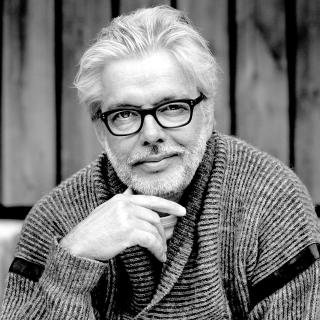
Master pianist Rudolf Buchbinder has recorded Johannes Brahms’s piano concertos three times with the world’s most prestigious orchestras.
Buchbinder speaks of Brahms’s piano concertos with an authority based on a career spanning over 60 years and his familiarity with Brahms’s own manuscripts.
“I try to interpret the piece as it is written. These pieces are hundreds of years old, why should we find something new.”
“There was an uproar among the public and critics. The reviews were exceptionally harsh, and one critic suggested that I be locked up in a mental hospital and that they should make sure that I don’t have any sheet music.” Arnold Schoenberg’s description of the premiere of his tone poem Pelléas and Mélisande arouses curiosity. In music history, the work is described as the last gasp of the Romantic era.
Johannes Brahms: Piano Concerto no. 1 in D minor op. 15
The career of composer Johannes Brahms (1833–1897) got off to a flying start when Robert Schumann declared him to be the next great name in symphonic music, a new Beethoven. This tribute was premature and had an unfortunate impact: although Brahms was an undeniable virtuoso, his merits as a composer up to that time included only what might be described as kindling for firing up his performing career: sonatas, solo songs and chamber music. Schumann’s praise heaped unreasonable pressure on the emerging young musician, and Brahms struggled with this until he actually completed a symphony — more than 20 years later.
Brahms wrote several works based on material that he originally intended to make into a symphony. The earliest of these is the Piano Concerto no. 1 in D minor (1858). It was initially supposed to be a sonata for two pianos. Brahms began writing it in 1854, soon after Schumann had been dragged out of the river Rhine and committed to a mental asylum. When Schumann’s death began to seem inevitable, Brahms decided to convert the sonata into a symphony, as a sort of parting gift to his friend and mentor. This plan proved too ambitious to be sustained, but in the end the stuff of this sonata/symphony emerged as perhaps the most symphonic piano concerto ever written.
The concerto is in three movements, and its tumultuous nature mirrors Brahms’s mental turmoil. The first movement captures the anguish caused by Schumann’s attempted suicide by drowning and his subsequent death. The second movement is a warm-hearted love letter to his widow, Clara Schumann. The finale evokes the shadow of Beethoven, with which Brahms had only just begun to come to grips.
Arnold Schönberg: Pelléas et Mélisande
The magnum opus of Belgian Nobel laureate Maurice Maeterlinck (1862–1949) is the play Pelléas et Mélisande (1893), a subdued love-triangle tragedy dominated by tense atmospheres and significant gestures rather than dramatic twists and turns. The play met with a lukewarm reception from the press and at the box office but was later recognised as a cornerstone of the Symbolist movement. It inspired a number of composers: Gabriel Fauré (1898) and Jean Sibelius (1905) wrote incidental music for it, Claude Debussy turned it into an opera (1902), and Alexandre Desplat (2013) wrote a Flute Concerto based on the narrative.
Pelléas ja Mélisande op. 5 (1903) by Arnold Schönberg (1874–1951) represents his early period, where tonal harmony was being pushed to its limits but not yet completely exploded. Maeterlinck’s brooding, meandering text translates into a tense dramatic arc: Golaud finds Mélisande in the forest and marries her, but she falls in love with his stepbrother Pelléas. Having found the two in flagrante delicto, Golaud kills Pelléas and wounds Mélisande, who later dies giving birth to a baby girl.
The work is in a single movement, but Schönberg’s pupil Alban Berg identified four sections. The first is about the forest, Golaud and Mélisande’s wedding and her ardent love. The second section is at the fountain where Mélisande loses her wedding ring and at the tower where Pelléas falls in love with Mélisande’s hair. The third section begins as a love scene but ends with the death of Pelléas, and the final section ebbs towards Mélisande’s death.
Jukka-Pekka Saraste
Jukka-Pekka Saraste, Chief Conductor and Artistic Director of the Helsinki Philharmonic Orchestra, has established himself as one of the outstanding conductors of his generation. Born in Finland in 1956, he began his career as a violinist. Today, he is renowned as an artist of exceptional versatility and breadth.
Saraste has previously held principal conductorships at the WDR Symphony Orchestra in Cologne, the Oslo Philharmonic Orchestra, the Finnish Radio Symphony Orchestra, the Toronto Symphony Orchestra, and the Scottish Chamber Orchestra, and has served as Principal Guest Conductor of the BBC Symphony Orchestra. As a guest conductor, he appears with major orchestras worldwide, including the Orchestre de Paris, the London Philharmonic Orchestra, the Staatskapelle Berlin, the Cleveland Orchestra, the New York Philharmonic Orchestra, and the Symphony Orchestras of Boston, Chicago, and San Francisco.
Coaching and mentoring young musicians is of great importance to Saraste. He is a founding member of the LEAD! Foundation, a mentorship programme for young conductors and soloists.
www.jukkapekkasaraste.com
Rudolf Buchbinder
“Music has never stopped fascinating me. And even after all these decades there are still some works, including works that I have heard many times and played even more frequently, that have the notorious “goose bumps passages”, moments that touch and stir you as much as ever. This also includes the F major passage in the first movement of Brahms’ D Minor Piano Concerto.”
Rudolf Buchbinder (b. 1946) is one of the legendary performers of our time. The authority based on a career spanning more than 60 years is uniquely combined with esprit and spontaneity in his piano playing. He has performed the 32 piano sonatas of Beethoven in cycles all over the world more than 60 times.
Buchbinder attaches great importance to historical music sources. His private collection of sheet music includes 39 different editions of Beethoven's complete piano sonatas, and for example copies of the autograph piano parts of both piano concertos by Johannes Brahms.
Rudolf Buchbinder is an honorary member of the Vienna Philharmonic Orchestra, the Gesellschaft der Musikfreunde in Wien, the Wiener Konzerthausgesellschaft, and the Vienna Symphony Orchestra.
On the stage today
Violin 1
Pekka Kauppinen
Kreeta-Julia Heikkilä
Lina Leikola
Eija Hartikainen
Katariina Jämsä
Helmi Kuusi
Elina Lehto
Ilkka Lehtonen
Kari Olamaa
Petri Päivärinne
Kalinka Pirinen
Sirkku Helin
Aada Kuoppa
Ángeles Salas Salas
Katinka Korkeala
Tuuli Talvitie
Violin 2
Anna-Leena Haikola
Anna Husgafvel
Teija Kivinen
Kamran Omarli
Maiju Kauppinen
Teppo Ali-Mattila
Heini Eklund
Serguei Gonzalez Pavlova
Dhyani Gylling
Matilda Haavisto
Liam Mansfield
Krista Rosenberg
Virpi Taskila
Pauline Fleming-Unelius
David Seixas
Viola
Atte Kilpeläinen
Torsten Tiebout
Mariette Reefman
Petteri Poijärvi
Aulikki Haahti-Turunen
Kaarina Ikonen
Tiila Kangas
Liisa Orava
Iiro Rajakoski
Markus Sallinen
Hajnalka Standi-Pulakka
Pei-Yi Wu
Cello
Lauri Kankkunen
Tuomas Ylinen
Beata Antikainen
Jaani Helander
Mathias Hortling
Ilmo Saaristo
Saara Särkimäki
Johannes Välja
Amrei Bohn
Oona Koivukangas
Annika Valkeajoki
Tommi Wesslund
Bass
Adrian Rigopulos
Eero Ignatius
Jon Mendiguchia
Paul Aksman
Tuomo Matero
Henri Dunderfelt
Joshua Baker
Pauli Pappinen | Flute
Niamh McKenna
Elina Raijas
Päivi Korhonen
Jenny Villanen
Oboe
Nils Rõõmussaar
Simeon Overbeck
Jussi Jaatinen
Paula Malmivaara
Clarinet
Samuel Buron-Mousseau
Oliver Shermacher
Anna-Maija Korsimaa
Angel Molinos
Heikki Nikula
Bassoon
Markus Tuukkanen
Erkki Suomalainen
Mikko-Pekka Svala
Noora Van Dok
Horn
Ruben Buils Garcia
Ville Hiilivirta
Miska Miettunen
Mika Paajanen
Sam Parkkonen
Joonas Seppelin
Satu Huuskonen
Marian Strandenius
Trumpet
Thomas Bugnot
Obin Meurin
Mika Tuomisalo
Marco Cubillas Bolado
Trombone
Victor Álvarez Alegria
Valtteri Malmivirta
Anu Fagerström
Jussi Vuorinen
Sakari Mäkimattila
Tuba
Ilkka Marttila
Timpani
Mikael Sandström
Tomi Wikström
Percussion
Tuomas Siddall
Pasi Suomalainen
Teo de la Cruz
Alex Martin Agustin
Harp
Lily-Marlene Puusepp
Katilyne Roels
Minnaleena Jankko
Saara Olarte
|