Sheherazade is the heroine and narrator of One Thousand and One Nights, who inspired composer Maurice Ravel to compose the overture and song suite.
The soloist in Ravel's Sheherazade song series is Emma Kajander, winner of the 2025 Lappeenranta Song Competition.
Boléro is “an experiment in a very special and limited direction...a piece lasting seventeen minutes and consisting wholly of orchestral tissue without music – of one long very gradual crescendo. There are no contrasts, and there is practically no invention except in the plan, and the manner of the execution. The themes are impersonal – folk tunes of the usual Spanish-Arabian kind,” said Maurice Ravel, describing his most famous work.
Born in the early 20th century, Ahmed Adnan Saygun was a Turkish ethnomusicologist and composer who felt a passion for both long and arduous journeys in Anatolia to collect folk melodies and for symphonic music. His First Symphony builds bridges between Asia and Europe.
Maurice Ravel: Shéhérazade, overture and song cycle
In the late 19th century, French art music began to adopt influences from exotic far-off lands such as East Asia and the Middle East. Maurice Ravel (1875–1937) wrote a number of works inspired by far-away cultures and landscapes. The Arabian Nights story collection prompted him to write his first orchestral work, the concert overture Shéhérazade (1898). This was poorly received at its premiere in Paris in spring 1899; critics panned Ravel for simply imitating others. While the influence of Borodin and Rimsky-Korsakov is discernible, the score is of a high technical quality and evokes a captivating fairy-tale atmosphere. Ravel nevertheless withdrew the work, and it was not published until 1975.
A few years later, Ravel wrote another work with the same title. This Shéhérazade (1903) is a song cycle for soprano and orchestra setting poems by Tristan Klingsor, the pen name of Léon Leclère. He, like Ravel, was a member of the Apaches, an artist group that favoured new ideas and approaches.
The song cycle was premiered in Paris in spring 1904 by soprano Jeanne Hatto, conducted by Alfred Cortot, who is better known as a pianist. Ravel’s idiom had evolved into something quite a bit more original since the ill-fated overture, and critics received this new work favourably. The work comprises three songs: ‘Asie’ is a catalogue of the wonders of the Far East; ‘La flute enchantée’ is sensitive and ecstatic in turn; and the concluding ‘L’indifférent’ evokes the possibility of an erotic encounter.
Ahmet Adnan Saygun: Symphony no. 1 op. 29
Ahmet Adnan Saygun (1907–1991) studied with Vincent d’Indy in Paris. He returned to his native Türkiye in 1931 and created a career advancing cultural activities as a teacher, musicologist and conductor. He was in favour of westernising Türkiye and supported the reforms of President Kemal Atatürk. He and four other composers formed a group known as the Turkish Five.
Saygun’s musical idiom combines Western and Soviet Neo-Classicism with tunes and modes from Turkish folk music. His stylistic influences include composers such as Martinů, Shostakovich, Honegger and Bartók, with whom Saygun worked as an assistant when Bartók was collecting folk tunes in Türkiye in 1936.
Saygun’s output includes the oratorio Yunus Emre, operas, concertos, four string quartets and choral works. His music was internationally quite well known in its day, being performed by distinguished artists such as conductor Leopold Stokowski.
Saygun wrote five symphonies. His first was completed in 1953 and is dedicated to Austrian conductor Franz Litschauer. The work incorporates themes from Saygun’s String Quartet no. 1 (1947) but with a broader and more symphonic treatment. There are four movements: ‘Allegro’, ‘Adagio’, ‘Allegretto’ and ‘Allegro assai’.
Maurice Ravel: Boléro
The most famous composition of Maurice Ravel (1875–1937) by a wide margin is the Boléro. Dancer Ida Rubinstein once asked Ravel to orchestrate a couple of piano pieces by Isaac Albéniz for a ballet performance. Ravel began working on the project, only to discover that orchestral versions of the pieces already existed and his contribution was not needed after all. This did not upset him, however, as he had already begun to think of writing a Spanish-themed piece of his own.
The Boléro was premiered at the Paris Opera on 22 November 1928 with a choreography by Bronislava Nizhinska and staging by Alexander Benois. The orchestra of the Opera was conducted by Walther Straram. The performance caused a sensation, and Boléro went on to become one of the most frequently performed works in the Western orchestral repertoire. Ravel was quite astonished by its huge success, since he regarded it as a throwaway experiment.
The Boléro is a single crescendo of grand proportions: the music begins extremely quietly and gains force as more instruments join in. The incessant side drum rhythm keeps the energy going.
The piece relies on the compelling power of repetition: at some point, the listener is inevitably drawn in to follow the progress of the music with the intensity of watching a thriller. The most spectacular moment in the piece comes near the end, when after more than 10 minutes in C major the music shifts without warning to E major.
Jan Söderblom
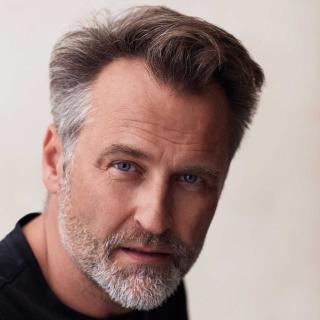
Jan Söderblom (b. 1970) is a Finnish violinist and conductor. He studied conducting at the Sibelius Academy under Jorma Panula and Leif Segerstam and has since worked with major Finnish orchestras as well as with several international ensembles, including the Scottish Chamber Orchestra, MDR Leipzig Radio Symphony Orchestra, the Danish National Chamber Orchestra, and the Norrköping and Helsingborg Symphony Orchestras.
Söderblom’s recent conducting engagements include concerts with the Iceland Symphony Orchestra, Tapiola Sinfonietta and the Lahti Symphony Orchestra, as well as Prokofiev’s Cinderella at the Finnish National Opera.
Söderblom is an experienced opera conductor, and has led premieres such as Thomas Jennefelt’s Sport och fritid and Veli-Matti Puumala’s Anna Liisa, the latter also receiving a critically acclaimed recording.
Jan Söderblom is well known to audiences of the HPO both as the orchestra’s concertmaster (2014–2025) and as a conductor; he most recently conducted the orchestra in January 2025. He is Artistic Director of the Finnish Chamber Orchestra and also leads several music festivals in Finland.
Emma Kajander
Soprano Emma Kajander (b. 1997) made her debut at the Finnish National Opera in the leading role of Andrew Lloyd Webber’s The Phantom of the Opera in 2024. Her engagements for the current season include Pamina in Mozart’s Zauberflöte at the Royal Swedish Opera in Stockholm. She will also appear as a soloist with Jyväskylä Sinfonia in Handel’s Messiah. Next summer Kajander will be heard at the Bregenz Festival, performing in the world premiere of Daníel Bjarnason’s Passion of the Common Man and in Benjamin Britten’s Les Illuminations with the Vorarlberg Symphony Orchestra.
Kajander won the 2025 Lappeenranta Singing Competition. The previous year she placed second both in the Kangasniemi Singing Competition and in the Helsinki Lied Competition. She also won the first prize in the Nordic Havets Röst competition in 2023. She has been awarded the Martti Talvela Foundation Prize.
Kajander is currently studying at the Sibelius Academy with Outi Kähkönen. She has additionally studied with, among others, Irina Gavrilovici, Karita Mattila, and Camilla Nylund.
On the stage today
Violin 1
Otto Antikainen
Kreeta-Julia Heikkilä
Lotus Tinat
Eija Hartikainen
Katariina Jämsä
Maiju Kauppinen
Helmi Kuusi
Elina Lehto
Jani Lehtonen
Petri Päivärinne
Kalinka Pirinen
Satu Savioja
Elina Viitasaari
Sirkku Helin
Ángeles Salas Salas
Tuuli Talvitie
Violin 2
Anna-Leena Haikola
Kamran Omarli
Krista Rosenberg
Teppo Ali-Mattila
Heini Eklund
Serguei Gonzalez Pavlova
Dhyani Gylling
Matilda Haavisto
Linda Hedlund
Liam Mansfield
Siiri Rasta
David Seixas
Virpi Taskila
Anna Tanskanen
Viola
Torsten Tiebout
Lotta Poijärvi
Petteri Poijärvi
Aulikki Haahti-Turunen
Tiila Kangas
Carmen Moggach
Liisa Orava
Iiro Rajakoski
Mariette Reefman
Markus Sallinen
Hajnalka Standi-Pulakka
Elina Heikkinen
Cello
Tuomas Ylinen
Beata Antikainen
Nadja Barrow
Jaani Helander
Mathias Hortling
Jaakko Rajamäki
Ilmo Saaristo
Saara Särkimäki
Pekka Smolander
Sami Mäkelä
Bass
Ville Väätäinen
Adrian Rigopulos
Svenja Dose
Jon Mendiguchia
Paul Aksman
Eero Ignatius
Tuomo Matero
Taavi Korhonen | Flute
Niamh McKenna
Franziska Fundelić
Päivi Korhonen
Oboe
Paula Malmivaara
Nils Rõõmussaar
Jussi Jaatinen
Clarinet
Samuel Buron-Mousseau
Anna-Maija Korsimaa
Oliver Shermacher
Bassoon
Markus Tuukkanen
Ilmari Kuoppa
Noora Van Dok
Erkki Suomalainen
Horn
Ruben Buils Garcia
Miska Miettunen
Mika Paajanen
Joonas Seppelin
Trumpet
Thomas Bugnot (A)
Obin Meurin
Michael Olsen
Mika Tuomisalo
Trombone
Víctor Álvarez Alegría
Anu Fagerström
Jussi Vuorinen
Tuba
Ilkka Marttila
Timpani
Tomi Wikström
Percussion
Tuomas Siddall
Pasi Suomalainen
Alex Martin Agustin
Antti Ohenoja
Tiia Toivanen
Harp
Anni Kuusimäki
Minnaleena Jankko
Keyboard
Anna Kuvaja
Saxophone
Olli-Pekka Tuomisalo
Juho Pétas |