Kent Nagano's childhood memories are expressed on the grand scale of a concert hall. The programme includes spiritually based music from four centuries.
Kent Nagano grew up in small town USA, far from big cities and concert halls. Despite this – and perhaps precisely because of this – music played an important role in his life from an early age: “We played music in the house all the time, so it was a way that a family became close together; and we were very much involved in the church, so there was a lot of music in there too. My sister and brother and I grew up in the children’s chorus in the church.”
J.S. Bach – Leopold Stokowski: Ein Feste Burg
Leopold Stokowski (1882–1977) was, in his day, a great celebrity who would have been totally at home in today’s social media, revelling in photographs, interviews, concert and film appearances, and leading a colourful private life. Also an eminent conductor, he is, however, best remembered for his orchestral transcriptions of works by, in particular, J.S. Bach. Most famous in this respect is the one he made of the Toccata and Fugue in D Minor with which Disney’s Fantasia begins. Rather than keeping strictly to the conventions of Bach’s Baroque, he sought to create a powerful atmosphere. Luther’s 1520s hymn Ein Feste Burg is a major musical symbol of the Reformation and has found its way into the works of many a composer. Stokowski made two arrangements of it for orchestra, that dating from 1939 and edited by Edwin Heilakka of the Curtis Institute, Philadelphia being the one more commonly performed.
Igor Stravinsky: Symphony of Psalms
Igor Stravinsky (1882–1971) was a veritable Neoclassical trend-setter in the 1920s. One of his finest works of the period is the Symphony of Psalms he composed in 1930 as a commission from Serge Koussevitzky for the 50th anniversary of the Boston Symphony Orchestra. Stravinsky had experienced a religious awakening in the previous decade. He began to pray, went to church and studied the Bible, and the Symphony reflects his need to express his Russian Orthodox faith by musical means. But, he said, “The Symphony of Psalms is not a symphony in which I have included psalms to be sung. On the contrary, it is the singing of psalms that I am symphonising.”
On the contrary, it is the singing of psalms that I am symphonising.
What makes the Symphony Neoclassical? Its references to Renaissance and Baroque counterpoint and its objective, disciplined approach, for example. The omission of violins and violas creates a special, sombre mood. The work is in three movements performed without a break: Psalms 38 (restless seeking), 39 (the finding of faith) and 150 (a hymn of praise to God).
Hildegard of Bingen: O vis eternitatis
Hildegard of Bingen (c. 1098–1179) is unusual in that eight centuries were to pass before most people became aware of her. This was in the 1990s, when many began to feel a need for calm, meditative music with a religious dimension. Maybe they were tired of dissonant contemporary music, data overload and intellectualism and turned instead to the music of composers such as Pärt, Kancheli and Górecki.
Hildegard was a German Abbess and the writer of learned texts on subjects ranging from medicine and cosmology to religion. A famous visionary in her day, she corresponded with Popes and Emperors. They already tried to canonise her in 1228, but it did not happen until 2012.
O vis eternitatis (O power within eternity) is from the collection Symphonia armoniae celestium revelationum (Symphony of the Harmony of Celestial Revelations) of liturgical songs composed by Hildegard to texts of her own.
Felix Mendelssohn: Symphony No. 5 in D, The Reformation, Op. 107
Though born a Jew but a loyal Protestant convert, Felix Mendelssohn (1809–1847) wanted to compose a symphony as his contribution to the celebrations in honour of the 300th anniversary of the Augsburg Confession in 1830. Progress was, however, slow and by the time he had finished it, the summer’s German concert series were full. He therefore offered it to Habeneck’s orchestra in Paris, but while the conductor liked it, the players complained it did not have enough tunes. Even after it had finally been premiered in Berlin in 1832, Mendelssohn himself began to look upon it as worthless, and it was not performed again until after his death. At the premiere, it bore the dramatic subtitle “Symphony to Celebrate the Church Revolution”. The title by which it is known today, the Reformation Symphony, was the publisher’s idea.
The devout first movement begins with an Andante featuring the Dresden Amen motif, and the finale incorporates Luther’s famous chorale Ein feste Burg ist unser Gott (A Mighty Fortress Is Our God).
Tuuli Lindeberg
Soprano Tuuli Lindeberg is one of the leading performers of baroque and contemporary vocal music in Finland. She has often been praised by critics for the pure quality of her voice and her musical versatility. She regularly collaborates with leading chamber orchestras and baroque ensembles in her native country, appearing frequently as a soloist in oratorios, choral works and in concert recitals.
Lindeberg is a regular guest soloist at numerous Finnish music festivals and performs frequently on the national radio and television. Her stage work includes roles such as Kleopatra in Hasse’s Marc’Antonio e Cleopatra, Schutzgeist in Kozeluch’s Gustav Wasa, Dido in Purcell’s Dido and Aeneas, The Woman in Kilpiö’s Mustan veden yli, “E” in Nuorvala’s Flash flash, Caroline in Talvitie’s The Judge’s Wife, and the soprano part in the vocal quartet in Saariaho’s Only the Sound Remains. She was appointed the artistic director of the Musica nova Helsinki festival in 2021.
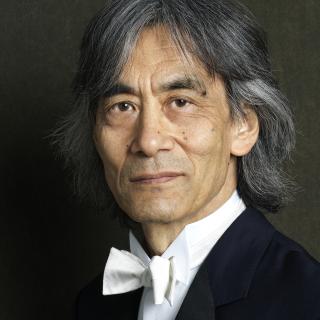
Kent Nagano
Kent Nagano is considered one of today’s outstanding conductors for both operatic and orchestral repertoire. Nagano served as Music Director of the Hamburg State Opera and Chief Conductor of the Hamburg Philharmonic from 2015 until the end of last spring. This season, he began as the Principal Artistic Partner of Filarmonica Toscanini in Parma, and he will be the next Chief Conductor and Artistic Director of the Orquesta y Coro Nacionales de España (OCNE) in Madrid starting in September 2026.
California-born Nagano began his career as Music Director of the Berkeley Symphony Orchestra. His success in the US was followed by appointments as Music Director of the Opéra National de Lyon in France and the Hallé Orchestra in England. He has also held artistic leadership positions with the Los Angeles Philharmonic, the Bavarian State Opera, and the Deutsches Symphonie-Orchester Berlin, where he has been named Honorary Conductor.
At the Salzburg Festival, Kent Nagano conducted the world premiere of Kaija Saariaho’s opera L’Amour de loin. While leading the Bavarian State Opera, Nagano commissioned new operas from composers such as Unsuk Chin and John Adams.
Violin 1
Kreeta-Julia Heikkilä
Meri Englund
Eija Hartikainen
Katariina Jämsä
Elina Lehto
Ilkka Lehtonen
Jani Lehtonen
Kari Olamaa
Kalinka Pirinen
Satu Savioja
Elina Viitasaari
Liam Mansfield
Harry Rayner
Sirkku Helin
Violin 2
Anna-Leena Haikola
Kamran Omarli
Ángeles Salas Salas
Teppo Ali-Mattila
Heini Eklund
Serguei Gonzalez Pavlova
Dhyani Gylling
Alexis Mauritz
Siiri Rasta
Krista Rosenberg
Virpi Taskila
Violetta Varo
Viola
Atte Kilpeläinen
Torsten Tiebout
Petteri Poijärvi
Kaarina Ikonen
Tiila Kangas
Liisa Orava
Markus Sallinen
Hajnalka Standi-Pulakka
Violetta Haraszti
Tuukka Susiluoto
Cello
Lauri Kankkunen
Beata Antikainen
Inkeri Rajamäki
Jaani Helander
Veli-Matti Iljin
Jaakko Rajamäki
Ilmo Saaristo
Saara Särkimäki
Hans Schröck
Johannes Välja
Bass
Ville Väätäinen
Johane Gonzalez Seijas
Adrian Rigopulos
Matis Eissaks
Paul Aksman
Eero Ignatius
Tuomo Matero
Henri Dunderfelt | Flute
Niamh McKenna
Elina Raijas
Päivi Korhonen
Jenny Villanen
Katja Ceder
Oboe
Hannu Perttilä
Jussi Jaatinen
Nils Rõõmussaar
Sanna Niemikunnas
Takuya Takashima
Clarinet
Veera Myllyniemi
Hyesoo Kim
Anna-Maija Korsimaa
Heikki Nikula
Bassoon
Markus Tuukkanen
Mikko-Pekka Svala
Yasuko Matsuzaki-Svala
Noora van Dok
Horn
Ruben Buils Garcia
Miska Miettunen
Sam Parkkonen
Joonas Seppelin
Trumpet
Xiang Guo
Thomas Bugnot
Mika Tuomisalo
Joel Guahnich
Mikko Mikkola
Trombone
Victor Álvarez Alegria
Valtteri Malmivirta
Jussi Vuorinen
Ricardo Pedrares Patiño
Tuba
Ilkka Marttila
Timpani
Tomi Wikström
Harp
Anni Kuusimäki
Keyboard
Minna Koskimies
Minnaleena Jankko |