A fruit basket of Sibelius’s compositions
Sibelius respected tradition, yet at the same time, he created something new with his music. He developed his own tone language and, along the way, broke familiar boundaries and bent them into his own expressive form.
Let's examine three orchestral structures in the music of Sibelius: the symphonic poem, the concerto, and the symphony.
Symphonic poem En Saga (A Fairytale), Op. 9
A symphonic poem functions as an independent, one-movement piece for orchestra. The piece may have a plot or it may instead be so-called absolute music, which tells no particular story. En Saga represents the latter, although there are plot suggestions in the piece. For the young Sibelius, En Saga (1892) was his first one-movement, purely instrumental piece for orchestra.
Violin Concerto in D minor, Op. 47
Sibelius himself would have liked to be a violinist. Composing overtook his dreams of becoming a violinist only during his studies, when he realised that his skills would not be enough to become a virtuoso. It can therefore be speculated that a special amount of love for the violin flowed into his concerto. The work became one of the most performed violin concertos of all time.
The concerto has three movements according to the traditional structure:
- Fast (Allegro moderato) This movement is in sonata form: exposition, development, recapitulation
- Slow (Adagio di molto)
- Fast (Allegro ma non tanto)
Jan Söderblom, conductor
Inmo Yang, violin
Helsinki Philharmonic Orchestra
Symphony No. 1 in E minor, Op. 39
Sibelius's First Symphony represents a traditional four-movement symphony in terms of structure:
- Fast (Andante, ma non troppo – Allegro energico), sonata form
- Slow (Andante)
- Third movement in three parts (Scherzo)
- Fast finale (Finale, quasi una fantasia)
The typical structure of a symphony offers variety for the audience and, on the other hand, the opportunity to present different music under the same whole. The first movement is in sonata form and brisk, the second is slow and more lyrical, the third is dance-like and in three parts – a kind of hint of the Baroque era, when dance was an essential part of orchestral music – and the finale, which is a festive conclusion to a great work.
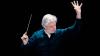
Jukka-Pekka Saraste, conductor
Helsinki Philharmonic Orchestra
Sibelius x Saraste Series
Text: Satu Simola