The orchestra of Sibelius – a small village with a long memory
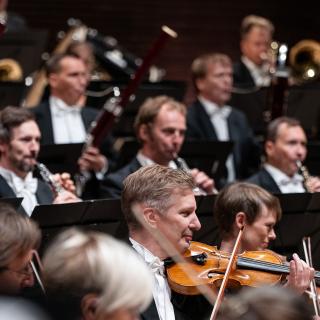
The orchestra is like a small village. Its seats are filled with a range of skills that only a few are capable of and that require decades of practice.
There is one very special feature of an orchestra: in its playing, it is like a living organism, carrying in its essence the legacy of past musicians across chronological boundaries.
What does this mean? An orchestra possesses a lot of expertise that accumulates when people play closely together for years. Colleagues who have joined the orchestra at different times consciously and unconsciously pass on verbal and non-verbal information: less experienced orchestra members learn from more experienced ones, tips are shared, skilled colleagues are used as a model, and the musicians develop through practice and invent new things themselves.
A musician may play next to you who once played next to another musician, who played with another musician who played premieres of Sibelius's works under the direction of Robert Kajanus or even Sibelius himself. This chain carries a silent lesson about how to play, what style to aim for and what is a good sound for the piece in question. In this way, the Orchestra of Sibelius is born.
Also, skilled conductors accumulate a range of different views about the same pieces, and over the years, with dozens and dozens of performances, the orchestra’s musicians accumulate huge resources of different ways of interpreting familiar works.
Production: Helsinki Philharmonic Orchestra
Text: Satu Simola