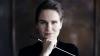
Our musicians will perform three concerts without a conductor this season, the first of which will present Italy.
Why settle for one when you can have seven? The first half of the concert will feature a joyful medley of favourite arias and duets from the operas of Giacomo Puccini operas. Soprano Tuuli Takala and tenor Tuomas Katajala will shine as soloists. Felix Mendelssohn preserved the impressions of his long trip to Italy in watercolour sketches and the notes of his Fourth Symphony, which conveys Mediterranean sunshine, religious solemnity, monumental architecture and wide open countryside.
Giacomo Puccini: Viene la sera, duet from the opera Madama Butterfly
Giacomo Puccini: "E lucevan le stelle", Cavaradossi's recitative and aria from the opera Tosca
Giacomo Puccini: A te
Giacomo Puccini: Avanti, Urania!
Giacomo Puccini: "Chi il bel sogno di Doretta", aria from the opera La rondine
Giacomo Puccini: "Se come voi piccina io fossi", aria from the opera Le Villi
Giacomo Puccini: "Tu che di gel sei cinta", aria from the opera Turandot
Giuseppe Verdi: Overture to the opera La forza del destino
By the late 1850s, Giuseppe Verdi (1813–1901) was at the height of his career as a composer. However, his most recent opera projects, including Simon Boccanegra and Un ballo in maschera, had caused him some grief, and he decided to take a break from writing music. He withdrew to his home in Parma. At his farm in St. Agata, he spent time gardening, riding, hunting and rowing on the lake. In the evenings, he played cards with his wife. Sometimes he treated himself to a cigar. This life was familiar and safe, and in the long run mind-numbingly boring.
When the Imperial Theatre in St Petersburg reached out to Verdi in hopes of a new opera, the maestro was more than happy to return to work. He was given free rein as to the subject, and he commissioned Francesco Maria Piave to write a libretto based on the play Don Álvaro by Spanish playwright de Saavedra. La forza del destino was premiered in St Petersburg in late 1862.
In this melodramatic tale, every character is a hostage to their destiny. Seeking to escape the inevitable brings certain ruin and death. The most popular number in the opera is its overture, which introduces the savage Leitmotif symbolising Fate.
Christian Holmqvist, translation: Jaakko Mäntyjärvi
Giacomo Puccini: Arias and solo songs
Verdi was succeeded at the very pinnacle of Italian opera by Giacomo Puccini (1858–1924). Puccini’s ability to combine emotionally compelling music with touching narratives made him world-famous.
Madama Butterfly (1904) – an opera about Cio-Cio-San, a Japanese geisha cruelly deceived by a Yankee sailor – contains both a blood-curdling culmination and some of the most sensitive music that Puccini ever wrote. In the duet ‘Viene le sera’, all is still well. In another devastating opera, Tosca (1900), the sadistic Chief of Police, Scarpia, lusts after Tosca and uses Cavaradossi, a painter, as his instrument. Cavaradossi, awaiting his execution, sings the aria ‘E lucevan le stelle’.
A te (1875) is an early solo song, written by a teenage composer flexing his wings. Avanti, Urania! (1896) was inspired by a yacht named Urania owned by an Italian Marquis.
La rondine (1917) was Puccini’s attempt at writing something resembling an operetta, which were fashionable at the time. In ‘Chi il bel sogno di Doretta’, Magda the courtesan tells the story of a girl who falls in love with a student. Puccini’s first ever opera, Le Villi (1894) features nature mysticism, uncharacteristically for him. When Roberto leaves his home village, his fiancée Anna presents him with flowers in the aria ‘Se come voi piccina io fossi’.
Puccini’s final opera, Turandot (1926), based on an Oriental fairy tale, remained unfinished. Liù, a slave girl, sings her aria ‘Tu che di gel sei cinta’ in response to torture inflicted on her so that she would divulge the name of the unknown Prince: you too will learn one day what love is.
Christian Holmqvist
Translation: Jaakko Mäntyjärvi
Hugo Wolf (arr. Max Reger): Italian Serenade
Austrian composer Hugo Wolf (1860–1903) is one of the masters of the Lied. He wrote nearly 300 solo songs to poems by Goethe, von Eichendorff, Mörike and others before syphilis wrecked his mental health. At the age of 38, he committed himself to a mental asylum where he died five years later.
Wolf’s greatest idol was Wagner, and as a music critic he was a fierce champion of Wagner’s work. Inspired by his role model, he developed a unique musical idiom characterised by emotional intensity and a harmonic language advanced for its time. His life goal was to write a Wagnerian opera, but Der Corregidor (1895) failed to measure up because of its terrible libretto, and Manuel Venegas (1897) remained unfinished.
The Italian Serenade is one of Wolf’s few instrumental pieces. He wrote it for string quartet in a couple of days in spring 1887, originally intending it as one of the three movements in a suite. In 1892, he arranged the piece for viola and chamber orchestra, contemplating the writing of a four-movement “Italian suite” which never materialised. In 1903, Max Reger wrote a version of the piece for chamber orchestra based on Wolf’s score. The Italian Serenade shows us a side of Wolf that avoids Wagnerian grandeur and rhetoric: it is a happy, light and humorous piece of music.
Christian Holmqvist
Translation: Jaakko Mäntyjärvi
Felix Mendelssohn: Symphony no. 4 in A major ‘Italian’ op. 90
Felix Mendelssohn (1809–1847) was the Sunday’s child of art music. He was born into the family of a banker, and his talent was noticed and nurtured at an early age. He was at home in the cultural circles of his community from childhood, was adept at networking and created a brilliant career as a composer, pianist and conductor. But the success story had its downside. Mendelssohn began to suffer from mounting self-criticism and turned into a perfectionist. He came to consider that he had written his best works in his teens. Eventually he became so insecure that he began to withhold his scores from the public.
One of the scores thus withheld was the Symphony in A major, written to a commission from the London Philharmonic Society. Its premiere in London in spring 1833 had been a huge success, but Mendelssohn, not pleased with the result, rewrote the score. Even then he was not happy, and the work was not printed until after his death. Traditionally numbered no. 4, it was in fact chronologically the third symphony that he wrote.
The Symphony was inspired by Mendelssohn’s trip to Italy in 1830. The second movement, for instance, was prompted by a religious procession in Naples. Mendelssohn would have been surprised at the enduring popularity of the work. He could not have guessed that audiences and musicians alike would continue to love its sunny disposition and brilliant orchestration. He would instead have moped over clumsy voice-leading or some such thing. Such can be the fate of a child prodigy.
Christian Holmqvist
Translation: Jaakko Mäntyjärvi
Tuuli Takala
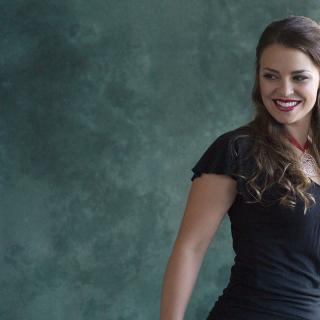
Finnish soprano Tuuli Takala (b. 1987) rose to prominence in 2013 by winning both the Kangasniemi Singing Competition and the Timo Mustakallio Singing Competition, as well as making her breakthrough at the Finnish National Opera as the Queen of the Night in Mozart’s Die Zauberflöte. She has since performed the role at major venues including the Royal Opera House Covent Garden, the three opera houses of Berlin, Vienna Volksoper, Savonlinna Opera Festival and Opéra de Toulon. In 2015, she joined the ensemble of Dresden’s Semperoper.
Recent engagements include Sibelius’s orchestral songs with the Deutsche Radio Philharmonie under Pietari Inkinen and concert in Helsinki as soloist of the Urkuyö & Aaria Festival. In 2022, she appeared with the Helsinki Philharmonic Orchestra in the world premiere of Olli Kortekangas’s song cycle Songs of Meena, written especially for her.
Tuomas Katajala
Finnish tenor Tuomas Katajala (b. 1975) is one of the most versatile singers in the Nordic, with a repertoire of more than 100 oratorios, orchestral works and lieds spanning the Baroque to the contemporary.
Recent highlights include Mahler’s Symphony No. 8 with the Latvian National Opera under Tarmo Peltokoski, Froh in Das Rheingold at Cologne Opera under Marc Albrecht, and Mahler’s Das Lied von der Erde in Palermo. This season, he reunites with Peltokoski and Mahler’s 8th as soloist with the Hong Kong Philharmonic Orchestra and appears in Beethoven’s Symphony No. 9 with the Turku Philharmonic Orchestra under John Storgårds, and Szymanowski’s King Roger with the Finnish Radio Symphony Orchestra.
Katajala studied at the Sibelius Academy and continued his training in Amsterdam and at the Accademia Rossiniana in Pesaro. He won first prize at the Musica Sacra Competition in Rome in 2004 and was a member of the Finnish National Opera ensemble from 2009 to 2014.