Embark on a musical time journey under the baton of conductor Manfred Honeck. A concert filled with expressiveness and sparkling rhythms awaits.
The concert begins with a musical journey through time to 1791, when Wolfgang Amadeus Mozart's opera Titus premiered in Prague and Joseph Haydn's symphonies aroused delight in London's society.
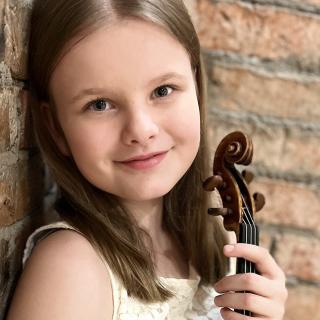
Violinist Lilja Haatainen makes her debut as a soloist at the HPO with a concerto by Camille Saint-Saëns that overflows with poetry and expressive melodies.
The evening ends with a 1940s neoclassicism that harkens back to Baroque music: harsh dissonances, folk elements, tango and rhythmic vitality. When listening to the Five Pieces by Czech composer Erwin Schulhoff, the audience can follow his own advice: “Music should first and foremost produce physical pleasures, yes, even ecstasies.” The concert evening is led by Manfred Honeck, Music Director of the Pittsburgh Symphony Orchestra.
Wolfgang Amadeus Mozart: Overture to La clemenza di Tito
Mozart (1756–1791) wrote the opera La clemenza di Tito at a breakneck pace for the coronation celebrations of the new King of Bohemia, Emperor Leopold II, in Prague in autumn 1791. The opera had originally been commissioned from Antonio Salieri, but he did not have time to write it. The commission was thus bumped to Mozart, who accepted it despite having The Magic Flute on his desk at the same time. The Mozart family was in dire financial circumstances, and they could certainly use the 250 ducats offered for the commission.
The story goes that Mozart wrote La clemenza di Tito in 18 days. This is not necessarily true, but it is true that he wrote some music for the opera while on the mail coach en route to Prague and that to save time he delegated the recitatives to his pupil, Franz Xaver Süssmayr.
Tito was premiered in Prague on 6 September 1791. Leopold II and his spouse Maria Luisa did not like it, and it was politely ignored at court. Yet when performances were opened up to the public at large, it became a great success. Today, Tito gets mixed reviews. Some feel that the music is a low-key routine effort, while others feel that the opera is underappreciated. What is agreed is that the story is hampered by Pietro Metastasio’s uninspiring libretto. The overture, however, needs no apologies: it is a magnificent orchestral piece.
Joseph Haydn: Symphony no. 93 in D major
Franz Joseph Haydn (1732–1809) left his lengthy engagement as conductor and composer at the court of Prince Esterházy in 1790. By that time, he had become famous all across Europe, and offers for employment came pouring in. He wrote a set of symphonies (nos. 93 to 104) to a commission from English impresario J.P. Salomon. These are known as the ‘London symphonies’ and represent the culmination of Haydn’s development as an orchestral composer while laying the groundwork for instance for Beethoven’s early symphonies.
Symphony no. 93 in D major would seem to have been the third of the London symphonies to be completed. It was premiered at the Hanover Square Rooms on 17 February 1792. This was London’s premier concert venue at the time. The Symphony was well received; The Times wrote: “...such a combination of excellence was contained in every movement, as inspired all the performers as well as the audience with enthusiastic ardour. Novelty of idea, agreeable caprice, and which combined with all Haydn’s sublime and wonted grandeur, have added consequence to the soul and feelings of every individual present.”
The Symphony has four movements. The first opens with an introduction followed by a joyous main section (Adagio – Allegro assai). The second is a set of variations (Largo cantabile), alternating lyrically suave moments with stylised drama. The bassoons provide a surprise towards the end of the movement. The third movement is an upbeat Minuet (Allegro), and the finale (Presto ma non troppo) is an utterly positive celebration of life.
Camille Saint-Saëns: Violin Concerto no. 3 in B minor
Composer, pianist and conductor Camille Saint-Saëns (1835–1921) was a giant on the French music scene for decades. Conservative in his tastes, he was a champion of classical values. The older he grew, the more incomprehensible the evolution of music seemed to him. In the end, he came to hate Debussy and Stravinsky with a vengeance, so much so that this did harm to his reputation.
Today, only a handful of works out of Saint-Saëns’s extensive output are regularly performed. One of these is his Violin Concerto no. 3 in B minor op. 61, completed in 1880. It is dedicated to the legendary Spanish violinist Pablo de Sarasate, who premiered the work in Hamburg in autumn 1880.
Saint-Saëns’s first two Violin Concertos are vehicles for virtuoso pyrotechnics, but the third one is lyrically dramatic. While the solo part certainly poses technical challenges, it does not embrace complexity for its own sake. The Concerto has the traditional three movements. The first (Allegro non troppo) opens with a passionate theme presented by the soloist, as in Mendelssohn’s Violin Concerto. The movement is classically lucid in its structure. The slow movement (Andantino quasi allegretto) is a lovely barcarole. The finale is an adaptation of a piece that Saint-Saëns had written for Sarasate in 1859, Caprice brillant for violin and piano. It opens with a brief introduction (Molto moderato e maestoso) followed by the main section (Allegro non troppo) with a Spanish flavour to it.
Erwin Schulhoff: Five Pieces
Austro-Czech composer and pianist Erwin Schulhoff (1894–1942) was a Jewish Communist who developed an interest in Schönberg and Debussy and on the other hand in tangos and Baroque music. He applied for Soviet citizenship when the Second World War began. His application was accepted, but the Nazis arrested him before he could leave Prague. In 1941, he was transferred to Wülzburg Prison in Bavaria, where he died of tuberculosis just over a year later.
Schulhoff’s early works are in a late Romantic style. After the First World War, he became enthusiastic about Dadaism and created a number of experimental works. Jazz influences can be heard for instance in the uproarious Suite for Chamber Orchestra (1921) and the ‘jazz oratorio’ H.M.S. Royal Oak (1930). In the 1930s, he wrote music for political occasions, such as the oratorio Komunistický Manifest (1932).
Five Pieces (Fünf Stücke für Streichquartett, 1924), as its original title indicates, was written for string quartet. It was premiered at the ISCM festival in Salzburg in the autumn of the same year and attracted considerable attention. The work contains playful allusions to popular music of the day and reflects the composer’s interest in dance. “I have an extraordinary passion for fashionable dances,” Schulhoff confessed to Alban Berg, “and there are times when I go dancing night after night [...] — this gives my creative work a phenomenal impulse.” The pieces were arranged for orchestra by Manfred Honeck and Tomáš Ille.
Manfred Honeck
Austrian conductor Manfred Honeck (b. 1958) has forged a long and distinguished relationship with the Pittsburgh Symphony Orchestra, now in his seventeenth season as its music director, with his contract running through 2027–28.
Honeck received his musical training at the Academy of Music in Vienna. Many years as a violist with the Vienna Philharmonic and the Vienna State Opera Orchestra have shaped his distinctive artistic voice. He began his conducting career as assistant to Claudio Abbado and as leader of the Vienna Youth Orchestra.
His earlier positions include serving as chief conductor of the MDR Symphony Orchestra Leipzig, music director of the Norwegian National Opera, and chief conductor of the Swedish Radio Symphony Orchestra. As a guest conductor he has led many of the world’s foremost orchestras, among them the Bavarian Radio Symphony Orchestra, Berlin Philharmonic, Royal Concertgebouw Orchestra, the London Philharmonic, and the Orchestre de Paris.
Lilja Haatainen
Born in 2011, Lilja Haatainen started playing the violin at the age of three. She studied at the Oulu Conservatory until 2022 when she moved to study with Janne Malmivaara. In addition, she is student of the Finland Violin Academy.
Haatainen made her concerto debut at the age of only eight, when she was chosen as a soloist for the Oulu Symphony Orchestra’s Young Soloists concert. In 2022, Lilja won the 10–12-year-old category of the national Jyväskylä Violin Competition and in the same year she successfully achieved 1st prize in the 9–13-year-old category of the Louis Spohr International Competition for Young Violinists in Germany.
Haatainen has performed as a soloist with many of the Finnish orchestras such as Finnish Radio Symphony Orchestra, Lahti Symphony Orchestra, Tapiola Sinfonietta, Finnish Chamber Orchestra, Jyväskylä Sinfonia, Oulu Sinfonia, and Vaasa City Orchestra as well as in Germany with Jena Philharmonic Orchestra. Conductor collaborations include Nicholas Collon, Dalia Stasevska, Kristian Sallinen and Rumon Gamba.
On the stage today
Violin 1
Kreeta-Julia Heikkilä
Abel Puustinen
Elina Lehto
Eija Hartikainen
Katariina Jämsä
Jani Lehtonen
Kari Olamaa
Petri Päivärinne
Kalinka Pirinen
Elina Viitasaari
Sirkku Helin
Susan Hwang
Katinka Korkeala
Pia Sundroos
Violin 2
Lina Leikola
Teija Kivinen
Kamran Omarli
Teppo Ali-Mattila
Heini Eklund
Dhyani Gylling
Liam Mansfield
Ángeles Salas Salas
Virpi Taskila
Taru Kircher
David Seixas
Viola
Atte Kilpeläinen
Torsten Tiebout
Petteri Poijärvi
Aulikki Haahti-Turunen
Tuomas Huttunen
Kaarina Ikonen
Tiila Kangas
Carmen Moggach
Mariette Reefman
Hajnalka Standi-Pulakka
Cello
Tuomas Ylinen
Beata Antikainen
Saara Särkimäki
Jaani Helander
Veli-Matti Iljin
Ilmo Saaristo
Johannes Välja
Tommi Wesslund
Bass
Ville Väätäinen
Adrian Rigopulos
Svenja Dose
Paul Aksman
Eero Ignatius
Joonas Korjus | Flute
Niamh McKenna
Päivi Korhonen
Jenny Villanen
Oboe
Nils Rõõmussaar
Paula Malmivaara
Jussi Jaatinen
Clarinet
Samuel Buron-Mousseau
Laure Paris
Heikki Nikula
Bassoon
Markus Tuukkanen
Erkki Suomalainen
Horn
Ville Hiilivirta
Miska Miettunen
Sam Parkkonen
Joonas Seppelin
Trumpet
Thomas Bugnot
Michael Olsen
Mika Tuomisalo
Trombone
Valtteri Malmivirta
Anu Fagerström
Jussi Vuorinen
Tuba
Ilkka Marttila
Timpani
Tomi Wikström
Percussion
Xavi Castelló Aràndiga
Mikael Sandström
Pasi Suomalainen
Harp
Anni Kuusimäki |