Stravinsky’s The Rite of Spring brings to the stage a brutal ritual: ancient tribes gather to offer a human sacrifice to the gods of spring.
The premiere of The Rite of Spring in 1913 famously led to rioting. Stravinsky’s unprecedentedly violent musical language and Vaslav Nijinsky’s brutal choreography resonate with the atmosphere of the time and the events that would lead to the outbreak of the First World War.
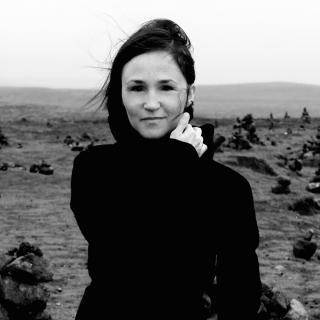
The concert program has been planned by the orchestra’s resident composer, Anna Thorvaldsdottir from Iceland. The composer’s instructions for playing her music are like an introduction to meditation: “When you see a long sustained pitch, think of it as a fragile flower that you need to carry in your hands and walk the distance on a thin rope without dropping it or falling. Absolute tranquillity with the necessary amount of concentration are needed to perform the task.”
Standing room tickets for the sold-out concert will be available starting at 9:00 a.m. on Friday, February 27.
Anna Thorvaldsdottir: AIŌN
Anna Thorvaldsdottir (b. 1977), the leading name in Icelandic art music today, is currently the Composer-in-Residence of the Helsinki Philharmonic Orchestra. She has attained fame with her highly original style, incorporating philosophical titles, existential topics and a musical idiom featuring impactful masses of sound and effects. Her orchestral sound is broad and rich, making listeners feel small by comparison.
Commissioned by the Gothenburg and Iceland Symphony Orchestras, AIŌN is Thorvaldsdottir’s most extensive work to date, a 40-minute journey into the dimensions of time. It outlines a conceptual space through which we can move completely freely — at once forward and back while viewing it from all aspects at once.
“This metaphor is connected to a number of broader background ideas in relation to the work,” says Thorvaldsdottir, “how we relate to our lives, to the ecosystem and to our place in the broader scheme of things, and how at any given moment we are connected both to the past and to the future, not just of our own lives but across — and beyond — generations.”
The first movement, ‘Morphosis’, flows and spirals towards an unavoidable, unknown and intimidating moment in the future. ‘Transcension’ is deceptively static, as the process of change continues in the background, covertly and overtly in turn. ‘Entropia’ begins as a merger of the previous two movements but is eventually ground to dust by a devastating mass of sound with the energy of a piledriver.
Igor Stravinsky: Le sacre du printemps
Igor Stravinsky (1882–1971) made his breakthrough with the ballet Firebird (1910), written for the Ballets Russes in Paris. This Romantic rendering of a folk tale was followed by Petrushka (1911), a rather more violent folkloric tale of a puppet that goes mad. What followed then was a reimagination of an ancient ritual taken to such brutal extremes in its searing harmonies and savage eruptions that there was nowhere to go from there, and subsequently Stravinsky turned to a diametrically opposite musical idiom.
This endpoint was Le sacre du printemps, based on a concept that the composer had been incubating for a couple of years. “One day while finalising Firebird, I had a surprising vision,” Stravinsky recalled. “I saw in my mind a festive pagan rite: wise elders sitting in a circle watching a young girl dance herself to death. She was being sacrificed to appease the gods of spring.” Stravinsky delved into sacrificial traditions and revisited a set of solo songs that he had written in 1908, featuring spring rituals performed by young maidens.
Most of the melodies in Le sacre du printemps are actually based on folk songs, although they have been mutilated beyond recognition by Stravinsky. The rhythmic structures and harmonies were something quite revolutionary for the time. The anecdote about a riot erupting at the disastrous premiere of Sacre is probably better known than the music itself. The story has been heavily embellished, though: while there may indeed have been a commotion in the audience, this was most likely a marketing ploy orchestrated by ballet director Serge Diaghilev. However, even without PR stunts Sacre would have established itself as one of the most significant orchestral works of the 20th century.
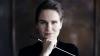
Eva Ollikainen
Since 2020, Eva Ollikainen has been Chief Conductor and Artistic Director of the Iceland Symphony Orchestra. Previously, she was Chief Conductor of the Nordic Chamber Orchestra. The 2025/26 season includes Ollikainen’s debut with the Münchner Philharmoniker, Rundfunk-Sinfonieorchester Berlin, Oslo Philharmonic Orchestra, Toronto Symphony Orchestra, and NHK Symphony Orchestra. In March, she leads the Iceland Symphony Orchestra on their European tour.
Curious about contemporary music, Eva Ollikainen has performed a wide range of repertoire with the Iceland Symphony Orchestra and is well known for championing the music of Icelandic composer Anna Thorvaldsdottir, with whom Ollikainen has a close artistic partnership. The world premiere of Thorvaldsdottir’s ARCHORA was given by Ollikainen in her BBC Proms debut in 2022 with the BBC Philharmonic.
Ollikainen is a former student of Leif Segerstam and Jorma Panula at the Sibelius Academy. She won the Jorma Panula Conducting Competition at the age of 21. Today, she teaches regularly at the Sibelius Academy.
Violin 1
Sophie Heinrich
Kreeta-Julia Heikkilä
Lina Leikola
Eija Hartikainen
Katariina Jämsä
Maiju Kauppinen
Helmi Kuusi
Elina Lehto
Ilkka Lehtonen
Petri Päivärinne
Kalinka Pirinen
Elina Viitasaari
Dhyani Gylling
Aada Kuoppa
Celina Blasco Bronisz
Jari Valo
Violin 2
Anna-Leena Haikola
Anna Husgafvel
Teppo Ali-Mattila
Heini Eklund
Serguei Gonzalez Pavlova
Sirkku Helin
Liam Mansfield
Siiri Rasta
Krista Rosenberg
Ángeles Salas Salas
Ruben Goesch
David Seixas
Viola
Mariette Reefman
Carmen Moggach
Petteri Poijärvi
Aulikki Haahti-Turunen
Kaarina Ikonen
Liisa Orava
Markus Sallinen
Hajnalka Standi-Pulakka
Anu Airas
Vuokko Lahtinen
Maria Mangeloja
Ana Robles Galindo
Cello
Tuomas Ylinen
Beata Antikainen
Jaani Helander
Mathias Hortling
Veli-Matti Iljin
Ilmo Saaristo
Saara Särkimäki
Johannes Välja
Annika Valkeajoki
Woo Suk Jeong
Bass
Jon Mendiguchia
Paul Aksman
Henri Dunderfelt
Martti Genevet
Iikka Järvi
Tomi Laitamäki
Josh Lambert
Jani Pensola | Flute
Niamh McKenna
Elina Raijas
Päivi Korhonen
Jenny Villanen
Alexis Roman
Oboe
Simeon Overbeck
Jussi Jaatinen
Paula Malmivaara
Nils Rõõmussaar
Laura Kemppainen
Clarinet
Samuel Buron-Mousseau
Oliver Shermacher
Anna-Maija Korsimaa
Heikki Nikula
Angel Molinos
Bassoon
Markus Tuukkanen
Mikko-Pekka Svala
Arvid Larsson
Vertti Tapanainen
Tuukka Vihtkari
Horn
Ruben Buils Garcia
Ville Hiilivirta
Miska Miettunen
Mika Paajanen
Sam Parkkonen
Joonas Seppelin
Satu Huuskonen
Jonathan Nikkinen
Trumpet
Thomas Bugnot
Obin Meurin
Michael Olsen
Mika Tuomisalo
Jere-Pekka Laitinen
Bass Trumpet
John Kotka
Trombone
Victor Álvarez Alegria
Jussi Vuorinen
Joni Taskinen
Tuba
Ilkka Marttila
Matthijs Leffers
Timpani
Mikael Sandström
Tomi Wikström
Percussion
Tuomas Siddall
Pasi Suomalainen
Teo de la Cruz
Alex Martin Agustin |