How do you condense Wagner's fifteen-hour Ring cycle into an hour and a quarter without a single singer? Our roaringly romantic evening will be conducted by Susanna Mälkki.
In 1987, the Berlin Philharmonic carried out a project with conductor Lorin Maazel in which a symphonic orchestral series was woven from Richard Wagner's Ring opera cycle, starting from the greenish dawn of the Rhine and ending with the funeral pyre of the Twilight of the Gods.
The orchestra's instruments jump into the roles of singers wherever the melody requires it: the flute is Sieglinde, the daughter of the god Wotan, the trombone is Siegfried, son of Sieglinde, and the double bass is the giant Fafner. The Helsinki Philharmonic Orchestra warmly welcomes back its former Chief Conductor Susanna Mälkki to the podium for our Wagnerian evening.
There is no intermission during the concert.
Richard Wagner / Lorin Maazel: Der Ring ohne Worte
In 1849, Richard Wagner (1813–1883) came to a turning point in his career. On the one hand, he had been forced into exile after having sided with the rebels in the May Uprising in Dresden. On the other hand, he had just completed his opera Lohengrin (1848), a continuation of, yet also for him the endpoint of, the Romantic number opera tradition. He began contemplating a completely new genre of performing art that would integrate poetry, drama, fine art and music into a single comprehensive artwork or Gesamtkunstwerk. This concept eventually became reality in 1874 with the premiere of the four-evening opera extravaganza Der Ring des Nibelungen at a festival theatre that Wagner had had built at Bayreuth specifically for performances of his operas.
The libretto, written by Wagner himself, is derived from mythological sources: the early Medieval German Nibelungenlied and the ancient Scandinavian Edda. It features dozens of characters, convoluted relationships both familial and romantic, complicated plots, mythical creatures and gods. There is symbolism, there is allegory. In a nutshell: A ring fashioned from the Rhinegold gives its owner unlimited power, but it is cursed by its creator, Alberich. Wotan, the chief of the gods, gives the Ring as payment to the giants who built Valhalla, the abode of the gods. Siegfried manages to acquire the Ring but is betrayed. His beloved, Brünnhilde, understands that lust for power has corrupted gods and humans alike. She returns the Ring to the Rhinemaidens and sets Valhalla on fire as she joins Siegfried on the funeral pyre. The old world order is destroyed so that a new one can begin.
To make it easier to follow the narrative, Wagner developed what is known as the ‘Leitmotif technique’. Each major character (such as Siegfried and the Valkyries), item (sword, fire, the Ring) or other element (love, death, the Rhine river) has an easily identifiable signature tune that always accompanies it. Like a narrator’s voiceover, the Leitmotifs bind the plot and the music together.
Wagner only wrote one symphony, a youthful Beethoven pastiche that is conspicuous by its absence from concert programmes. Der Ring ohne Worte (1987), compiled by conductor Lorin Maazel (1930–2014), seeks to fill the gap. It is an orchestral suite that condenses the 15 hours of Wagner’s mature musical idiom in the Ring cycle into a work of a suitable duration for concert performance. It was commissioned by the Telarc record label, and thus it was absolutely obligatory that it should clock in at under 75 minutes in order to fit on one CD. Despite this limitation, the suite manages to cover all the major Leitmotifs and scenes in the Ring cycle without altering the original music, except for a couple of vocal melodies taken over by wind instruments.
The journey of the Ring begins in the depths of the Rhine river. Rising towards the surface, the music eventually ascends to Valhalla, the domain of the gods. Alberich, ruler of the dwarves, causes the Ring to be forged, accompanied by storm and lightning. A clash of cymbals sparks off the events of Die Walküre: Siegmund and Sieglinde, siblings separated at birth, fall in love and surrender to passion. Having discovered their offence, they flee from their father, the god Wotan. The famous ‘Ride of the Valkyries’ introduces Brünnhilde, who defies Wotan by defending Siegmund. Wotan punishes Brünnhilde by turning her into a mortal and putting her to sleep surrounded by a ring of fire. The magic could only be dispelled by a completely fearless hero penetrating the fire.
The third opera is Siegfried, whose title character is being trained by his foster father Mime to become a fearless swordsman. Siegfried forges a sword for himself and withdraws into the forest, where he meets a bird. The bird leads him to the mountaintop with the ring of fire. Having slain Fafner, the dragon guarding the Ring, Siegfried finds Brünnhilde, kisses her, and the couple are united with ecstatic fanfares.
Half of the duration of this orchestral re-telling is made up of music from the final opera, Götterdämmerung. Siegfried and Brünnhilde wake up after their first night together and the consummation of their love. Brünnhilde gives Siegfried the Ring as a token of loyalty as he embarks on new adventures along the Rhine river. At the castle of the Gibichungs, Siegfried meets Hagen, Alberich’s son, who first enchants Siegfried to forget about Brünnhilde and then has him murdered. The following sequence, ‘Siegfried’s funeral march’, is one of the most magnificent orchestral passages in the entire Ring cycle. Eventually Brünnhilde comprehends the betrayal, rides up onto the pyre to join Siegfried and returns the Ring to the Rhinemaidens. Valhalla bursts into flame, the gods are destroyed, and the old world order is no more.
Jaani Länsiö
Translation: Jaakko Mäntyjärvi
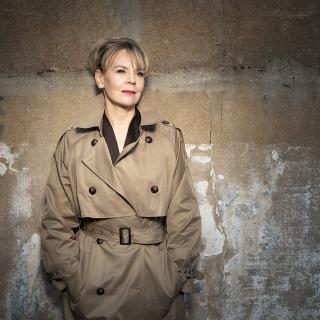
Susanna Mälkki
Susanna Mälkki (b. 1969) is one of today’s most sought-after conductors, appearing regularly with leading orchestras and opera houses worldwide. Chief Conductor Emeritus of the Helsinki Philharmonic Orchestra, she served as its Chief Conductor from 2016 to 2023 and was Principal Guest Conductor of the Los Angeles Philharmonic from 2017 to 2022. By invitation of Pierre Boulez, she was Music Director of Ensemble intercontemporain from 2006 to 2013.
Mälkki has conducted many of the world’s foremost orchestras, including the Cleveland Orchestra, New York Philharmonic, Chicago Symphony Orchestra, London Symphony Orchestra, Bavarian Radio Symphony Orchestra and Berliner Philharmoniker. This season’s engagements include performances in Los Angeles and Berlin, alongside productions of Der fliegende Holländer, Guillaume Tell and Lohengrin.
Her honours include Finland’s Pro Finlandia Medal, the Nordic Council Music Prize and an honorary doctorate from Uniarts Helsinki. Since 2025, she has served as Professor of Orchestral Conducting at the Sibelius Academy.