Petrushka is in love with a ballerina, but the ballerina wants the villain of the story, the Moor, who is Petrushka’s enemy. The story does not have a happy ending.
Stravinsky used the collage technique in his Petrushka, which showed that he was up to date with the times: at the same time, artists such as Pablo Picasso and Georges Braque were using newspaper clippings as material for their works.
Witold Lutosławski’s Cello Concerto begins in a striking way: the cellist plays the D note alone, monotonously, every second. Lutosławski’s own view of the situation resembles a description of the meditating mind: “I think of the D note as a moment of complete relaxation or even distraction. The performer abandons this state of mind as soon as something else starts happening and returns to it several times during the introduction.”
Igor Stravinsky: Feu d’artifice, Op. 4
Igor Stravinsky (1882–1971) began studying composition with Nikolai Rimsky-Korsakov in 1902. The young student thought highly of Rimsky particularly as a master of orchestration, but soon the maestro’s conservative taste began to bother him. He wanted to remain loyal to Rimsky but was also interested in the newest music of the day, particularly French composers such as Debussy and Dukas.
Stravinsky wrote a brief orchestral piece titled Feu d’artifice (Fireworks) in six weeks in the summer of 1908. It was an essay in combining Rimsky’s orchestral colours with French sonorities. He sent the score to his teacher, conscious of the risks: Rimsky would not necessarily approve of such music. We will never know what Rimsky would have thought of the piece, however, because he died before the score arrived in the mail. Stravinsky dedicated the piece to Rimsky’s daughter Nadezhda. She hated it.
Feu d’artifice was premiered in St Petersburg in early 1909. Serge Diaghilev, impresario of the Ballets Russes, was in the audience, and he immediately commissioned Stravinsky to write a ballet for him. Eighteen months later, Firebird made Stravinsky famous.
Christian Holmqvist, Translation: Jaakko Mäntyjärvi
Witold Lutosławski: Cello Concerto
A solo concerto hinges on the relationship between soloist and orchestra. A composer may choose to frame it as healthy competition or heightened conflict. Witold Lutosławski (1913–1994) wrote a cello concerto rooted in antagonism.
The brilliant cellist Mstislav Rostropovich had been begging Lutosławski to write a piece for quite some time, but nothing came of it until the Royal Philharmonic Society in the UK actually commissioned him to write a work for cello and orchestra. The Cello Concerto was premiered in London in 1970. It caused a sensation and was quickly established as a modern classic.
The score includes aleatoric counterpoint, where each musician plays their part independently, though within certain limits. The work is in four sections. The cello and orchestra are at loggerheads from the outset, and in the course of the music they only rarely find agreement. This has been seen as a reflection of both Lutosławski’s experiences under the Communist regime in Poland and Rostropovich’s experiences as a musician openly contemptuous of the Soviet Union. Lutosławski denied this, but it is impossible for a societally aware listener to avoid an impression of an individual boldly standing in opposition to a totalitarian system. In this light, it is interesting to note that Rostropovich was convinced that the soloist ‘dies’ before the end of the piece. The composer said that this was not so, since the work ends in a triumphal procession. “Indeed,” said Rostropovich, “but the triumph is in the hereafter.”
Christian Holmqvist, translation: Jaakko Mäntyjärvi
Igor Stravinsky: Petrushka (1911)
The premiere in Paris in 1911 of the ballet Petrushka by Igor Stravinsky (1882–1971) was an absolute sensation in every way: music, choreography, staging and singing. He had composed it as a commission from the director of the Ballets Russes in Paris, Sergei Diaghilev, and based it on a piece for piano and orchestra he was already working on.
Petrushka is a puppet who comes to life and the ballet is set in a Shrovetide Fair. Stall-holders are shouting their wares, people are laughing, someone is playing a barrel organ, and a merry-go-round can be heard. A magician begins his performance and the crowd cries out in delight at the three dancing puppets: Petrushka, a Ballerina and a Moor. Petrushka is hopelessly in love with the Ballerina, who cares not a bit for him. When the Moor and the Ballerina dance cheek-to-cheek, Petrushka flies into a jealous rage and gets into a fight with the Moor, who kills him with his scimitar. Maybe they are only puppets, but Petrushka’s ghost is spotted on the roof.
Christian Holmqvist
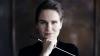
Jukka-Pekka Saraste
Jukka-Pekka Saraste, Chief Conductor and Artistic Director of the Helsinki Philharmonic Orchestra, has established himself as one of the outstanding conductors of his generation. Born in Finland in 1956, he began his career as a violinist. Today, he is renowned as an artist of exceptional versatility and breadth.
Saraste has previously held principal conductorships at the WDR Symphony Orchestra in Cologne, the Oslo Philharmonic Orchestra, the Finnish Radio Symphony Orchestra, the Toronto Symphony Orchestra, and the Scottish Chamber Orchestra, and has served as Principal Guest Conductor of the BBC Symphony Orchestra. As a guest conductor, he appears with major orchestras worldwide, including the Orchestre de Paris, the London Philharmonic Orchestra, the Staatskapelle Berlin, the Cleveland Orchestra, the New York Philharmonic Orchestra, and the Symphony Orchestras of Boston, Chicago, and San Francisco.
Coaching and mentoring young musicians is of great importance to Saraste. He is a founding member of the LEAD! Foundation, a mentorship programme for young conductors and soloists.
www.jukkapekkasaraste.com
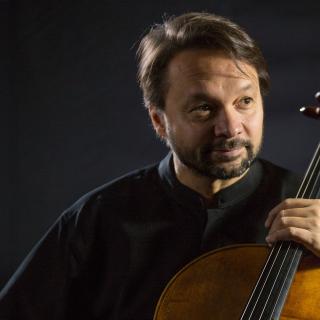
Marko Ylönen
Finnish cellist Marko Ylönen (b. 1966) is renowned as a soloist, chamber musician and teacher. Born in Rantasalmi, he began studying the cello at the age of nine and continued his education at the Sibelius Academy and in Basel. Competition success has accompanied his career from an early age: he reached the final of the Turku Cello Competition at fifteen, won second prize in the competition in 1990, received a prize at the International Tchaikovsky Competition in Moscow the same year, and won first prize at New York’s Artist Guild Competition in 1996.
Ylönen has appeared as soloist with most Finnish orchestras as well as ensembles including Camerata Salzburg, the English Chamber Orchestra, the Netherlands Chamber Orchestra and the Prague Chamber Orchestra. As a recitalist, he has performed at Carnegie Hall’s Weill Recital Hall in New York and the Concertgebouw in Amsterdam.
Ylönen has been Professor of Chamber Music at the Sibelius Academy since 2009. He performs on a cello by Bartolomeo Cristofori dating from the 1720s.