Turkish pianist and composer Fazıl Say is a pianist and composer whose music draws its distinctive colour from both jazz and Middle Eastern traditions.
Fazıl Say himself performs as the soloist of his piano concerto Mother Earth, in which countries, forests, seas and rivers each get their own part. The work, which premieres at the Osaka World Expo in spring 2025, invites us to pay attention to climate change and the preservation of life.
Johannes Brahms used to speak of his completed compositions in a dry tone. He completed his Fourth Symphony while spending summer days in the Austrian village of Mürzzuschlag. The composer feared that the work had absorbed influences from the region’s climate: “The cherries don't ripen in these parts; you wouldn't eat them!” Ignore the composer’s own comments. The Fourth Symphony is his symphonic masterpiece, filled with the warmth of May.
Live broadcast on medici.tv (subscription).
Watch on demand after the concert.
Fazıl Say: Mother Earth
Pianist Fazıl Say (b. 1970) made his composer breakthrough with the piano piece Black Earth (1997), followed by the gigantic Nâzim Oratorio (2001). Among his output of more than 100 works, the best known is probably the Istanbul Symphony (2009), which in 2013 was awarded the jury’s special prize at the ECHO Klassik gala. Say’s major works feature powerful narratives and are rooted in harmonies fusing Turkish tradition and jazz. His brilliant orchestration typically incorporates prominent passages for percussion, and the seven-movement piano concerto Mother Earth (2024) makes no exception.
The work was written to a commission from the luxury goods giant Cartier for the opening of the Women’s Pavilion at Expo 2025 in Osaka. The premiere was given by the Osaka Philharmonic under Simone Menezes. Say says: “Mother Earth is about the world’s climate problems, ecological problems. These fires in forests, the bad situation [at the] poles, so it looks like humans [are] killing this planet. So it is a warning situation, it is more than a warning situation. So my piece is a message.”
Clocking in at half an hour, the concerto paints a vision of the end of times with broad strokes. Initially, the piano sends forth a hope-inspiring melody that runs through the horrors evoked by the concerto: the earth splits, and the upheaval buries every living thing; forests go up in smoke and animals cry out; the seas flood the land, and rivers stop flowing. The fourth movement (‘Interlude’) and the concluding movement (‘Postlude’) incorporate reminiscences of Say’s early piano piece Black Earth.
Johannes Brahms: Symphony No. 4 in E Minor, Op. 98
“A symphony is no joke,” said Johannes Brahms (1833–1897), who was already 42 before he began his first and only ten years older his last. Indeed, jokiness is not an attribute readily associated with Brahms, and certainly not his fourth symphony. His friends found its dense texture and wealth of detail too taxing for their brains, and after hearing the first movement played on two pianos, the famous critic Hanslick exclaimed: “I had the feeling that I was being given a beating by two incredibly intelligent people.” The premiere in 1885 got an enthusiastic reception, however.
A master of development, Brahms could create great forms out of little ideas, and never more so than in the fourth symphony, where he seamlessly binds them together in a beautiful, sighing main theme. In the Andante moderato he uses the archaic Phrygian church mode or ‘scale’, thus reinforcing claims that he tended to look back to the past rather than to the future, and the closing movement, a passacaglia based on Bach’s cantata no. 150 leaves the listener in no doubt of this – and without a shred of hope even in the final chord.
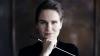
Jukka-Pekka Saraste
Jukka-Pekka Saraste, Chief Conductor and Artistic Director of the Helsinki Philharmonic Orchestra, has established himself as one of the outstanding conductors of his generation. Born in Finland in 1956, he began his career as a violinist. Today, he is renowned as an artist of exceptional versatility and breadth.
Saraste has previously held principal conductorships at the WDR Symphony Orchestra in Cologne, the Oslo Philharmonic Orchestra, the Finnish Radio Symphony Orchestra, the Toronto Symphony Orchestra, and the Scottish Chamber Orchestra, and has served as Principal Guest Conductor of the BBC Symphony Orchestra. As a guest conductor, he appears with major orchestras worldwide, including the Orchestre de Paris, the London Philharmonic Orchestra, the Staatskapelle Berlin, the Cleveland Orchestra, the New York Philharmonic Orchestra, and the Symphony Orchestras of Boston, Chicago, and San Francisco.
Coaching and mentoring young musicians is of great importance to Saraste. He is a founding member of the LEAD! Foundation, a mentorship programme for young conductors and soloists.
www.jukkapekkasaraste.com
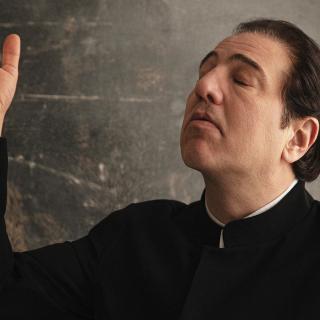
Fazıl Say
With his extraordinary pianistic ability, Fazıl Say (b. 1970) has been touching audiences and critics alike for almost 30 years. Since the beginning of his career, he has performed with many renowned orchestras, building up a diverse repertoire ranging from Bach to Viennese Classical Romantic and contemporary music, including his own compositions for piano.
With violinist Patricia Kopatchinskaja, Say performs in a long-standing duo. Other notable collaborators include Maxim Vengerov, Nicolas Altstaedt, Marianne Crebassa, and the Minetti Quartett. Say has built an extensive discography of over 50 recordings.
In the 2025/2026 season, Fazıl Say is the Artist in Residence at both the Schleswig-Holstein Musik Festival and the Gstaad Menuhin Festival. During these residencies, he performs with longtime partner orchestras – including the Camerata Salzburg, and the NDR Radiophilharmonie – and witnesses premieres of his own newly commissioned works presented by both festivals.
On the stage today
Violin 1
Pekka Kauppinen
Pekko Pulakka
Lotus Tinat
Eija Hartikainen
Katariina Jämsä
Helmi Kuusi
Elina Lehto
Ilkka Lehtonen
Jani Lehtonen
Kari Olamaa
Satu Savioja
Elina Viitasaari
Sirkku Helin
Alexis Mauritz
Violin 2
Ángeles Salas Salas
Anna-Leena Haikola
Kamran Omarli
Heini Eklund
Linda Hedlund
Liam Mansfield
Siiri Rasta
Krista Rosenberg
Virpi Taskila
Klara Leoson
Júlia Mušáková
Harry Rayner
Viola
Torsten Tiebout
Ulla Knuuttila
Lotta Poijärvi
Aulikki Haahti-Turunen
Tuomas Huttunen
Kaarina Ikonen
Carmen Moggach
Mariette Reefman
Markus Sallinen
Jaakko Laivuori
Cello
Lauri Kankkunen
Tuomas Ylinen
Jaani Helander
Veli-Matti Iljin
Ilmo Saaristo
Saara Särkimäki
Johannes Välja
Tommi Wesslund
Bass
Ville Väätäinen
Tuomo Matero
Svenja Dose
Paul Aksman
Henri Dunderfelt
Taavi Korhonen | Flute
Niamh McKenna
Janette Leván
Jenny Villanen
Oboe
Hannu Perttilä
Nils Rõõmussaar
Clarinet
Samuel Buron-Mousseau
Anna-Maija Korsimaa
Bassoon
Markus Tuukkanen
Alan Davidson
Noora Van Dok
Horn
Ruben Buils Garcia
Miska Miettunen
Mika Paajanen
Maria Luhtanen
Trumpet
Obin Meurin
Mika Tuomisalo
Trombone
Valtteri Malmivirta
Anu Fagerström
Brais Molina Varela
Tuba
Ilkka Marttila
Timpani
Tomi Wikström
Percussion
Xavi Castelló Aràndiga
Mikael Sandström
Pasi Suomalainen |